Your Drawings · Manufacturer Search · Prototypes · Production Follow-up
Custom Off-Road Parts Manufacturing Coordination
Have an original part design, a drawing or a product you want adapted? GBPH 4x4 helps find potential Chinese manufacturers and coordinates the route from your brief to factory quotations, samples, revisions and agreed production follow-up.
Bring your design to a manufacturer
From Drawings to a Factory Discussion
We help you find manufacturers to evaluate and make the parts your project needs. You can start with dimensioned drawings or CAD references, an authorized sample, a sketch or an outline of the intended result.
Detailed manufacturing quotes may need further technical information. We collect factory questions and help you organize the next decisions about dimensions, interfaces, materials, tolerances, finish and quantities. Technical design work is assigned to the manufacturer, you or an appointed professional as agreed.
Original Parts from Your Drawings
Approach potential manufacturers with your authorized files. Ask about capability, process, material, tolerances, tooling, prototypes and production conditions.
Changes to an Existing Product
Discuss a different size, mounting arrangement, layout, finish or kit configuration. We clarify whether the factory can adapt an existing platform or needs a new development project.
Manufacturing Directions We Can Help Explore
Cut, Formed & Welded Components
Brackets, skid plates, rack parts, cargo trays, utility panels and original accessory assemblies.
CNC-Machined Hardware
Defined-tolerance mounts, adapters and designed-for-purpose 4×4 components.
Project-Specific Assemblies
Combinations of fabricated or machined parts, specified fasteners and installation hardware.
Private Label & Packaging
Your authorized artwork, labels, instructions, kit contents and packaging requirements, coordinated with the manufacturer.
Actual manufacturing capability and project feasibility depend on the selected factory, design, process and technical requirements.
What We Coordinate With Manufacturers
- Understand the starting point. Review your latest files, the intended use, available measurements, estimated quantities and open questions. Identify drawing ownership and any confidentiality requirements before detailed files are shared.
- Research potential manufacturers. Approach factories whose stated capabilities may suit the required materials, processes and product type. Collect capability information, proposed approaches and questions for further review.
- Compare development and production quotations. Separate unit pricing from tooling, fixtures, prototypes, sample revisions and packaging charges. Clarify MOQ, lead-time assumptions, payment stages and what each quote includes.
- Coordinate prototypes or samples. Agree what the sample needs to demonstrate, who reviews it and which drawing revision applies. Arrange the agreed factory discussion and communicate practical sampling updates.
- Communicate feedback and revisions. Link measured observations and marked photographs to the relevant sample. Record factory responses, proposed costs, revised files and your approval before the next stage.
- Follow approved production. After design and sample approval, coordinate the agreed manufacturing milestones, packaging and delivery arrangements. Where needed, arrange independent inspection within a separate agreed scope.
What You Receive
Before Sampling
A project requirements summary, potential manufacturer responses, open technical questions and a comparison of quoted development and production conditions.
During Samples & Production
A file and sample version record, organized feedback and manufacturer answers, approval status, and updates against the agreed production milestones.
These records help you decide which manufacturer to select, whether a sample meets your requirements and when to approve the next step. View illustrative record formats.
A Useful Starting Package
- Your original drawing, CAD reference, sketch, photos or sample description.
- The intended function, vehicle application and important mounting interfaces.
- Material, tolerances, finish and required kit contents, where decided.
- Estimated prototype, trial-order and production quantities.
- Destination, target timing and packaging or branding requirements.
You can upload a PDF drawing or reference image through the inquiry form. For CAD files or a larger folder, share a file link or discuss a transfer method with us. Mark unknown details and clearly identify the latest revision.
For sensitive designs, tell us whether an NDA or restricted file-sharing arrangement is required before sending detailed files. The permitted manufacturers and information to share should be agreed for the project.
Costs, Tooling & Approval Responsibilities
The sourcing or manufacturing-coordination scope and service fee are agreed before work begins. Manufacturer tooling, fixtures, prototypes, revisions, product costs, freight and external services are quoted or clarified separately before the relevant commitments.
Confirm who owns tooling and drawings, where tooling is held, what changes or repeat production it may be used for, and which deliverables are included. Keep the approved drawing, sample, bill of materials and packaging version connected to the production order.
The selected manufacturer makes the products. You or your appointed technical reviewer approves engineering, fitment, specifications and samples. Any necessary technical design, testing or certification has a separately defined responsible party and scope.
See service fees & responsibilities · Sample approval checklist
Custom Project Questions
Can we find a manufacturer for a part from your drawing?
Yes. We can research potential manufacturers, communicate your authorized drawing and coordinate their feasibility questions, quotations, sample stages and production updates.
What if you only have an idea, photograph or sketch?
Start with that information and the result you want. We can organize manufacturer questions. Detailed engineering or drawings may be required before a factory can make a reliable quote or produce the part.
Can you change the size or fitment of an existing product?
We can discuss the proposed change with manufacturers and clarify new tooling, technical work, sample checks and quantities. A changed mounting interface or vehicle application needs its own validation.
Can support begin after you have already chosen a factory?
Yes. Share the current drawings, quotation, sample history and issue you want to resolve. The work can focus on manufacturer communication, sample revisions or production follow-up.
Can a custom part be made in a small quantity?
Share your estimated quantities. Material, process, fixtures, tooling and manufacturer conditions determine what is practical; prototype and production terms are reviewed for the project.
Custom manufacturing in practice
From a Drawing to a Production Decision
This is an illustrative workflow, not a claim about a completed customer order. Each project is scoped according to its technical requirements and the manufacturer’s capabilities.
1. Define the Design
Share the latest drawing revision, material, tolerances, use case, target vehicle and estimated quantity. Identify dimensions or loads that still need engineering confirmation.
2. Review the Manufacturing Route
Assess whether machining, cutting, bending, welding, casting or another process may fit the design. Discuss potential tooling needs and quote assumptions with manufacturers.
3. Inspect a Prototype or Sample
Agree measurable acceptance criteria, finish expectations, installation checks and the documentation required to approve or revise a sample.
4. Confirm Production Responsibilities
Record the approved revision, tooling and packaging arrangements, inspection scope, order terms and the parties responsible for each stage before production.
A rough sketch or photo is enough to start a conversation. Send a custom manufacturing inquiry · See illustrative project records.
Manufacturing documentation
What to Send for a Drawing-Based Project
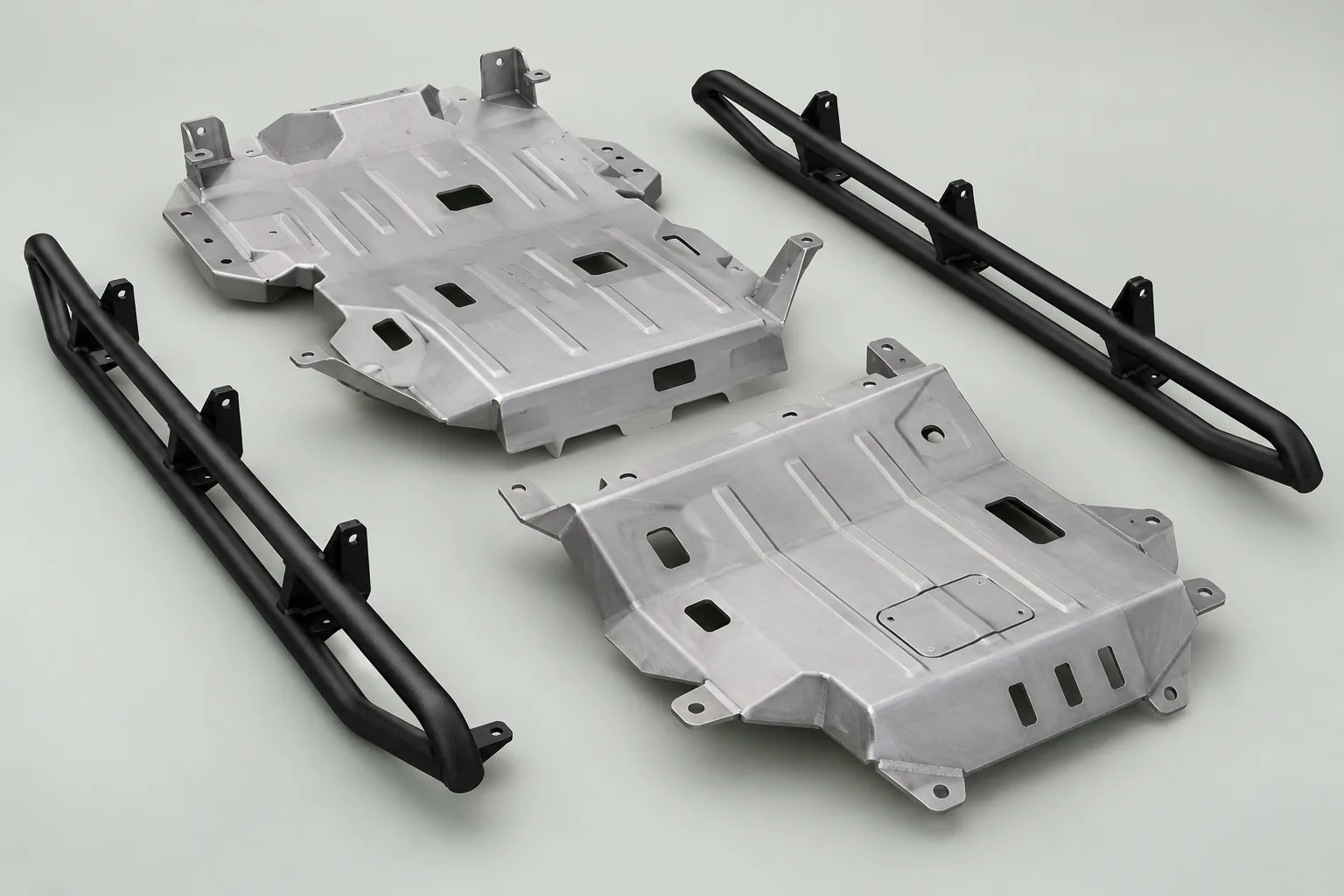
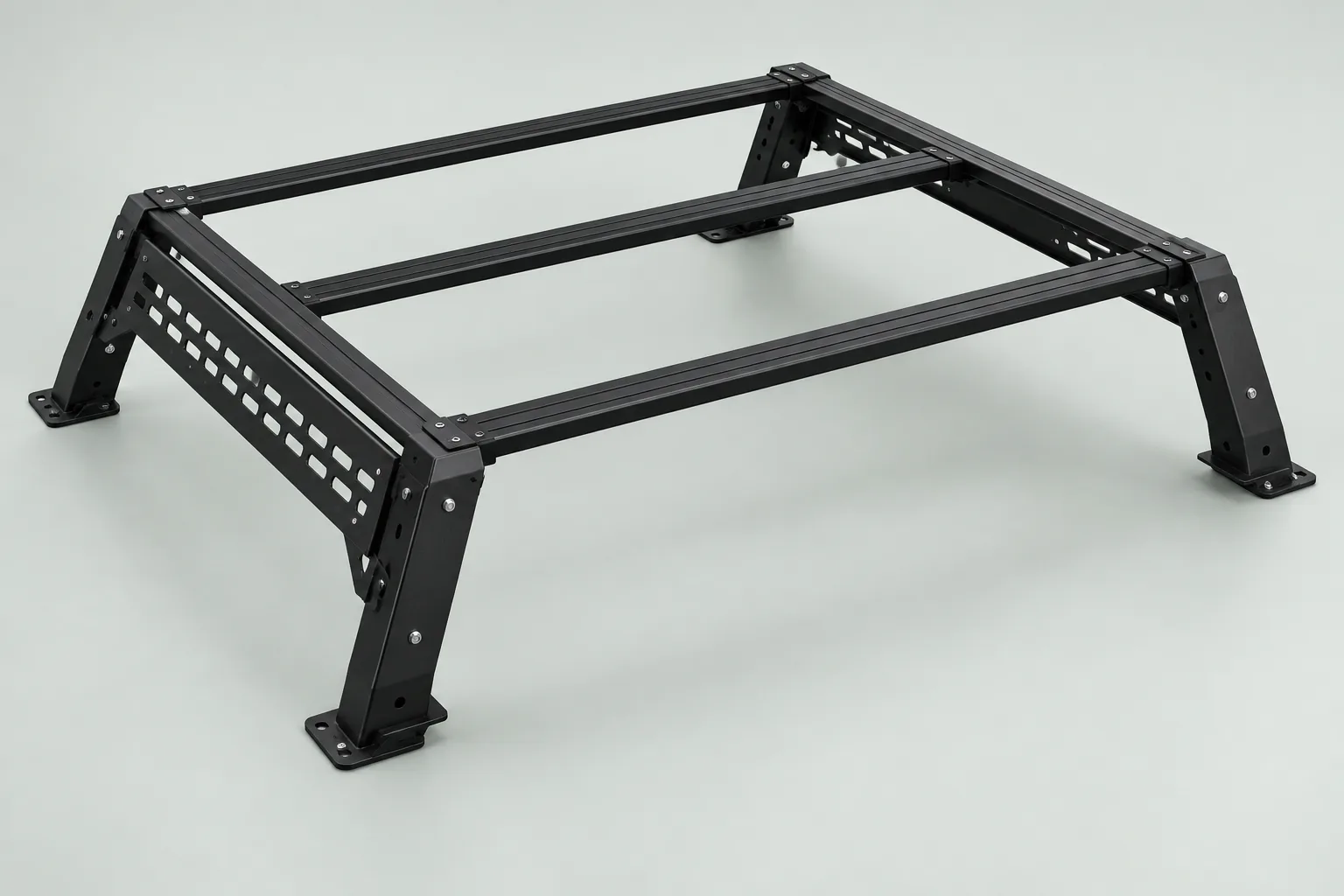
For a custom bracket, skid guard, rack interface or machined component, suppliers need a traceable technical baseline. A concept sketch can start the conversation; these items help turn it into a comparable feasibility request.
Drawing, Interfaces & Material
Identify a controlled CAD or drawing revision, critical installation datums, dimensions, material grade, surface treatment and intended application. Flag unresolved load-bearing or compliance requirements rather than presenting them as validated.
Process, Sample & Approval Package
Ask potential manufacturers to state a suitable process, production assumptions, fixtures or tooling, sample price, proposed inspection points and packaging. Keep prototypes, trial fits and production release as separate buyer approvals.
Read the manufacturing process guide · Open the drawing-based RFQ template.
Technical buying guides
Further Reading for This Project
- Factory sample approval and first article
- Tooling and CAD intellectual-property questions
- Low-volume manufacturing economics
Practical sourcing research to support a controlled RFQ, manufacturer evaluation and buyer approval process.
Buyer planning resources
Build a Production Release Pack
Keep the approved manufacturing information together so the sample decision can be carried into the first batch.
| Release item | What to identify |
|---|---|
| Drawing & bill of materials | Part numbers, current revisions, material, finish, supplied hardware and superseded files. |
| Sample decision | Reviewed sample identification, measurements, approved deviations and remaining actions. |
| Tooling & inspection | Agreed tooling/fixture arrangement, controlled features and the inspection method for the batch. |
| Production & packing | Authorized quantity, approved artwork, kit checklist, packing instruction and change approver. |
Practical project records
Track Changes Before Production
If mounting-hole spacing changes after a sample, record the new drawing revision, cost or timing impact and the named approval before that version is released. Keep the sample decision separate from approval to manufacture a batch.
Drawing & Sample Approval Record
Record the drawing revision, requested change, manufacturer response, sample identification, approval scope and next action.
Download Approval Record (TXT)Multi-Item Order & Handover Record
Track each item, approved version, quantity, packaging, batch or carton references, required documents and unresolved points.
Download Order & Handover Record (TXT)These editable text templates open without an account or spreadsheet software. They are blank working records; use your actual project information and agree responsibilities with the relevant manufacturer or provider.
Bring Us the Part You Want to Make
Send a product link, reference image, drawing or a short description of what you want to achieve. Add an approximate quantity and destination if known. We can help clarify the next questions with potential manufacturers.